
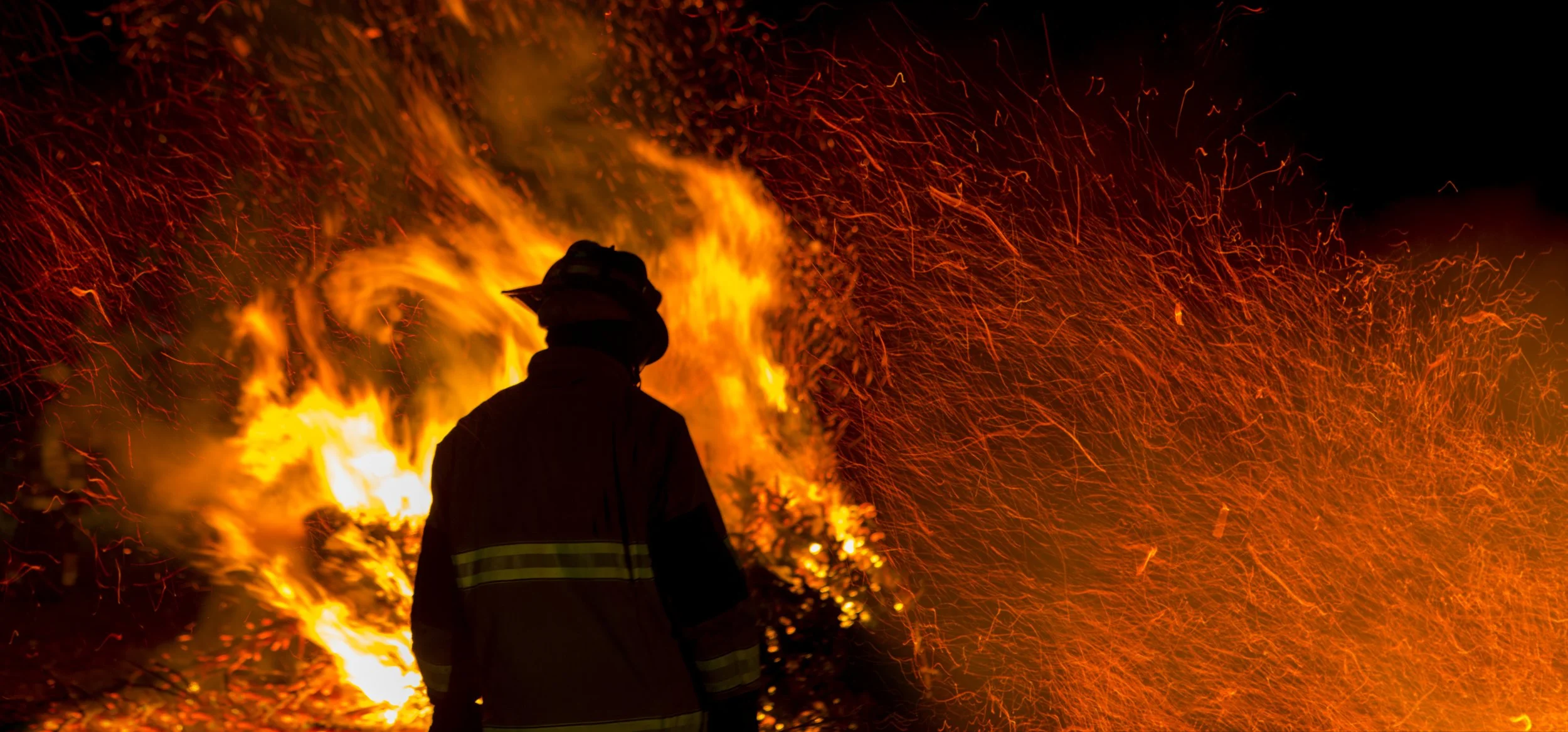
Wildfire Reform
TURN is disappointed that the 2026 legislature did not pass the wildfire reform necessary to protect ratepayers.
We will continue to pursue a structure where wildfire costs do not not unfairly impact ratepayers and Investor-Owned Utilities are held accountable for their actions.
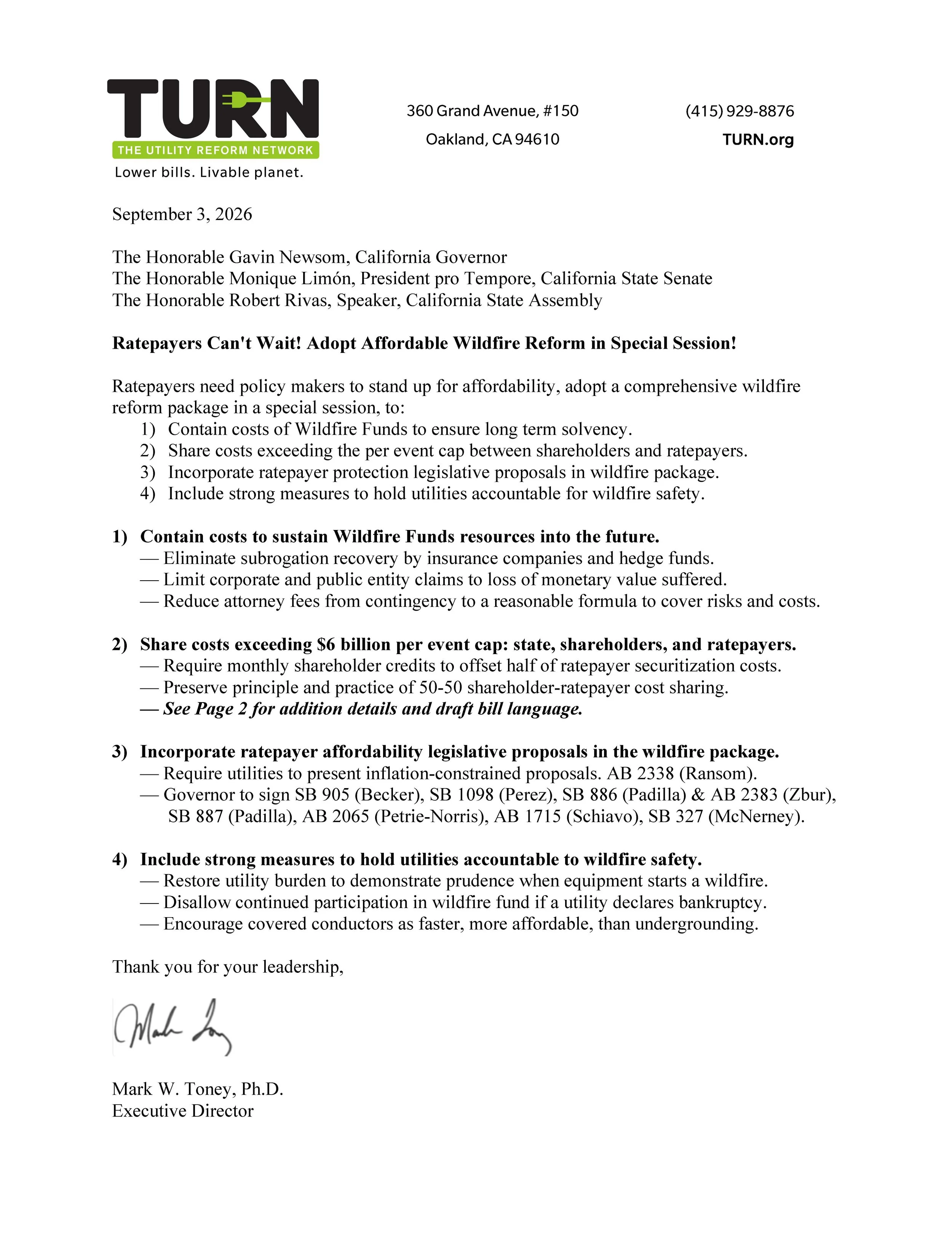
For more, please see TURN’s core principles for addressing wildfire (below) or download the letter to California state leadership on the importance of addressing wildfire issues in a special session (to the right).
Key Turn Principles for Any Wildfire Reform Package
(This is a preliminary list of ratepayer protection proposals. When the draft Wildfire Reform bill language is released, we will have others to add.)
Protect utility ratepayers from unlimited wildfire costs.
Protect the Wildfire Fund from subrogation claims from insurance companies and other third parties.
Set a cap on how much can be collected per incident, or per utility, for the lifetime of the Wildfire Fund through 2045.
Allocate state funds to cover wildfire survivors’ damages that exceed the cap.
Restore the requirement that utilities must prove they were not negligent in order to receive liability protection.
Restore the ability of external parties to participate in CPUC wildfire investigations before settlement
Provide prompt compensation to wildfire survivors.
Support a State-managed fast pay facility to accelerate payments to survivors and
reduce litigation costs.Make available a claims navigator to help applicants submit required documentation.
Establish the state as the wildfire insurer of last resort.
Create a state-sponsored insurance plan for all wildfires.
Make property insurance mandatory, just like automobile insurance.
Explore revenue options to set up a $36 billion Wildfire Rainy Day Fund.
Wildfire bonds, second home assessments, tax assessments, or increases.